


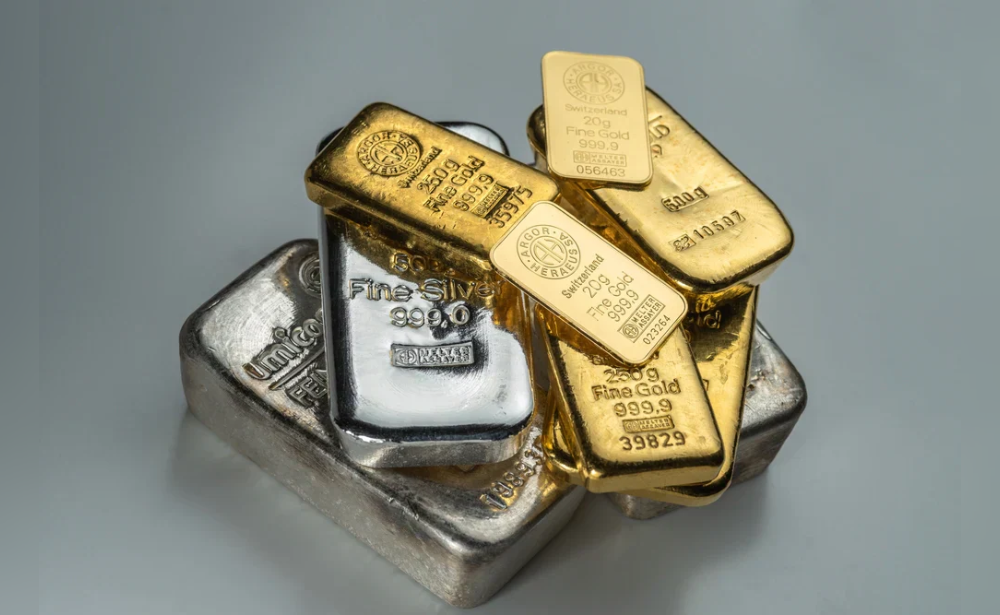
Gold and Silver Belong in Portfolios. Just Not in Large Amounts.
Gold and silver occupy an uneasy position in modern investment portfolios. They are alternately dismissed as unproductive relics or embraced as essential protection against financial disorder. Both views miss the point. The real question for long-term investors is not whether precious metals will outperform stocks or bonds in the coming years, but how they can be used—sparingly and deliberately—to improve portfolio resilience.
At a basic level, gold and silver are unlike most financial assets. They generate no income, offer no growth through reinvestment, and rely entirely on price appreciation for returns. That characteristic alone disqualifies them as core holdings for investors seeking long-term wealth creation. Equities, despite their volatility, remain unmatched in their ability to compound capital over time. Bonds, while less compelling than in the past, still provide income and stability. Precious metals play a different role altogether.
Gold’s primary value lies in its tendency to behave differently from traditional assets at critical moments. Over long periods, its correlation with equities and bonds has been low and, at times, negative. This characteristic becomes especially important during periods of stress, when diversification is most needed and least available. In market crises, inflation scares, currency devaluations, or episodes of geopolitical tension, gold has often served as a refuge, not because it generates returns, but because it is no one else’s liability.
That distinction is subtle but important. Gold is not backed by a government, a central bank, or a corporate balance sheet. Its value rests on scarcity, durability, and centuries of social consensus. This makes it a poor candidate for short-term forecasting but a useful hedge against systemic risks that are difficult to quantify or predict. Investors who view gold as a tactical trade are often disappointed. Those who treat it as insurance tend to understand it better.
Silver complicates the picture. Like gold, it has long been regarded as a store of value. Unlike gold, it is also an industrial metal, deeply embedded in modern manufacturing and technology. Demand for silver is tied to electronics, solar energy, medical equipment, and a growing array of industrial applications. As a result, silver prices tend to be far more volatile than gold’s and more sensitive to economic cycles.
This dual identity gives silver a different risk profile. In periods of strong global growth or reflation, silver can outperform gold dramatically. In economic downturns, when industrial demand weakens, it can fall just as sharply. That makes silver less reliable as a defensive asset and more suitable as a tactical or cyclical exposure. Investors who lump gold and silver together under the label of “precious metals” often underestimate how differently they behave when markets turn.
These differences matter when deciding how much of a portfolio should be allocated to each. For most long-term investors, gold belongs in the category of strategic diversifiers rather than return drivers. A modest allocation—typically between three and seven percent of a total portfolio—is sufficient to capture most of gold’s diversification benefits. Within that range, gold can help dampen volatility and reduce drawdowns during periods when both stocks and bonds struggle simultaneously.
Allocations above that level are harder to justify under normal circumstances. Gold’s long-term real return has been modest, roughly preserving purchasing power rather than expanding it. An excessive allocation can impose a meaningful opportunity cost during extended equity bull markets. That cost is not always obvious in the short run, but it compounds over time.
Silver, if included at all, generally warrants a smaller allocation. For most investors, zero to three percent of a portfolio is ample. At these levels, silver can provide exposure to industrial demand and potential upside during reflationary cycles without overwhelming the portfolio with volatility. Larger allocations transform silver from a diversifier into a speculative position, which may be appropriate for some investors but should be recognized as such.
Taken together, total exposure to gold and silver rarely needs to exceed ten percent of a diversified portfolio. Even that upper bound is most appropriate for investors with specific concerns: heavy exposure to a single currency, heightened sensitivity to inflation risk, or proximity to retirement with a strong emphasis on capital preservation. For younger investors with long time horizons and stable income, precious metals should typically occupy the lower end of the recommended range.
How precious metals are held is almost as important as how much is allocated. Physical bullion appeals to investors who worry about extreme systemic risks and counterparty failure. Holding coins or bars eliminates reliance on financial intermediaries and offers psychological comfort during periods of turmoil. But physical ownership comes with costs: storage, insurance, security, and illiquidity. For most investors, these drawbacks outweigh the benefits.
Exchange-traded funds backed by physical metal have become the preferred vehicle for portfolio exposure. They are liquid, transparent, and inexpensive to trade, making them well suited for rebalancing. While they do involve some dependence on the financial system, they function effectively for diversification purposes in all but the most extreme scenarios. For investors focused on portfolio construction rather than catastrophe planning, ETFs are usually the most practical choice.
Mining stocks are often mistaken for substitutes for gold and silver, but they are fundamentally different instruments. Shares of mining companies are equities, subject to management decisions, operational risks, political uncertainty, and capital market conditions. While miners can offer leveraged exposure to rising metal prices, they also tend to correlate with broader equity markets, especially during sell-offs. As a result, they do not provide the same defensive characteristics as bullion and should not be counted toward a portfolio’s gold or silver allocation.
The behavior of precious metals over time reinforces the importance of discipline. Gold and silver tend to perform best when real interest rates are falling, inflation expectations are rising, and confidence in fiat currencies is under strain. They often lag when real yields are rising and economic growth is strong and stable. Because these conditions shift unpredictably, attempts to time precious metals allocations based on macroeconomic forecasts often fail.
A more effective approach is to maintain a strategic allocation and rebalance periodically. When equities rally and precious metals lag, trimming stocks and modestly increasing gold exposure can restore balance. When fear drives gold sharply higher, reducing metal exposure and reallocating to risk assets can lock in gains. This rebalancing discipline turns volatility into a feature rather than a flaw.
Investors should also be clear about what precious metals cannot do. Gold does not hedge inflation perfectly over short horizons, nor does it reliably rise during every market downturn. There are periods when stocks, bonds, and gold all perform poorly at the same time. Precious metals improve portfolio robustness at the margin; they do not eliminate risk.
The case for holding gold and silver has become more prominent in recent years as investors grapple with high public debt, shifting monetary regimes, and geopolitical fragmentation. These concerns may ultimately prove justified, but building a portfolio around worst-case scenarios is rarely optimal. The more sensible response to uncertainty is diversification, not concentration.
In that context, gold and silver deserve consideration, but not reverence. A three to seven percent allocation to gold, supplemented by a small exposure to silver if desired, can enhance diversification without sacrificing long-term return potential. Beyond that, the benefits diminish and the costs rise.
Precious metals will never rival equities as engines of wealth creation, nor should they. Their value lies in what they do when confidence falters and correlations rise. For investors who understand that role and size their allocations accordingly, gold and silver can serve as quiet stabilizers—rarely celebrated, occasionally frustrating, but invaluable when the financial landscape turns hostile.
If you would like information on any of the above areas or any other area of financial planning, please contact:
Matt Baker, Managing Director, Singapore Expat Advisory
Email: advice@singaporeexpatadvisory.com
Tel/Whatsapp +65 9432 8781
www.singaporeexpatadvisory.com
Singapore Expat Advisory is an agency for Promiseland Financial Advisory Pte. Ltd and are authorised and regulated by the Monetary Authority of Singapore (MAS).
General Information Only This article should not be construed as an offer, solicitation of an offer, or a recommendation to transact in any products (including funds, stocks) mentioned herein. The information does not take into account the specific investment objectives, financial situation or particular needs of any person. Advice should be sought from a licensed financial adviser regarding the suitability of the investment. This article has not been reviewed by the MAS.